Tuesday, July 2, 2013

In Christ Alone by Sinclair Ferguson - 256 Pages


For the past few months I have been reading a few pages of this book every morning when I have extra quiet time.  It has proven to be one of my favorite books of its type.  Short chapters filled with truth.  Each chapter can be read in 5 minutes or less, yet there is much to chew on and think about and apply.

Ferguson lays the book out in 6 parts:

I.   The Word Became Flesh (Christology)
II.  The Heart of the Matter (The Gospel)
III. The Spirit of Christ (Pneumatology)
IV. The Privileges of Grace (Sanctification)
V.  A Life of Wisdom (Discipleship)
VI. Faithful to the End (Perseverance)

Although each of these sections has their own specific focus, they all flow out of the central theme of the sufficiency and glory of the Gospel of Jesus Christ.  Throughout the book I was impressed and helped by the way that Ferguson not only didn't avoid, but embraced and applied difficult doctrines such as limited atonement, predestination, total depravity, suffering, and the perseverance of the saints in a pastoral, concise, and clear way.

I recommend this book for anyone wanting to be encouraged to grow in their love of Christ.

"Santa Christ is sometimes a Pelagian Jesus.  Like Santa, he simply asks us whether we have been good.  More exactly, since the assumption is that we are all naturally good, Santa Christ asks us whether we have been "good enough"...Jesus becomes a kind of added bonus who makes a good life even better.  He is not seen as the Savior of helpless sinners."

"There is, therefore, an element in the Gospel narratives that stresses that the coming of Jesus is a disturbing event of the deepest proportions.  It had to be thus, for He did not come merely to add something extra to life, but to deal with our spiritual insolvency and the debt of our sin.  He was not concieved in the womb of Mary for those who have done their best, but for those who know that their best is "like filthy rags" (Isa. 64:6) - far from good enough - and that in their flesh there dwells no good thing (Rom 7:18).  He was not sent to be the source of good experiences, but to suffer the pangs of hell in order to be our Savior."

"Only a sinless Savior is able to die for our sins.  He cannot die for our sins if He must die for His own."

"Say this to yourself when you rise each day, when you struggle, or when you lay your head down sadly on your pillow at night: 'Lord Jesus, You are still the same, and always will be.'"


Sunday, June 30, 2013

Transcend: Beyond the Limits of Discipleship by Matt Smay - 114 Pages


This was a free ebook I downloaded from the Verge Network website.  It was a quick, easy read, and while there were some helpful thoughts in it, most of what was helpful can be found better said in other resources, and the spaces in between the helpful nuggets are filled with typical post emergent calls to be more relevant, descriptive narrative portions of Scripture used in prescriptive ways and early 2000s Christian catchphrases like "love on",  "lean into", and "incarnational" (all phrases that I have used myself btw).

While I did find Smay's outline of Discipleship helpful, I think he may have been a little overconfident when he states: "I will give you a new framework to use to lead yourself, your family, friends, community and church on the best run ever" - as if the church had been messing up discipleship for the last 2,000 years and he is going to fix it with his 5 step process.

He lays out his framework by using 5 E-words:

Expose:  the first step of discipleship is exposing people to the Gospel in a relational environment.
Embrace: next, moving from knowing about Christ to an embracing of Christ
Engage: a disciple who has truly embraced the Gospel will then live in light of it
Equip: Getting the "skillset to work from" to be successful on the journey of discipleship
Expand: Becoming disciples who make disciples who make disciples

I'm not sure what he meant by subtitling the book "Beyond the Limits of Discipleship" as these 5 E's are much of what discipleship should be according to Scripture.

In summary, there are some helpful reminders in this book, enjoyable illustrations, and good intentions.  Anyone attempting to call the church to pursue making disciples is a friend and ally in my book.  However the meat contained here is more accessible and clearly presented in other books such as Radical, 9 Marks of a Healthy Church, What is a Healthy Church Member?  to name a few.

Tuesday, June 25, 2013

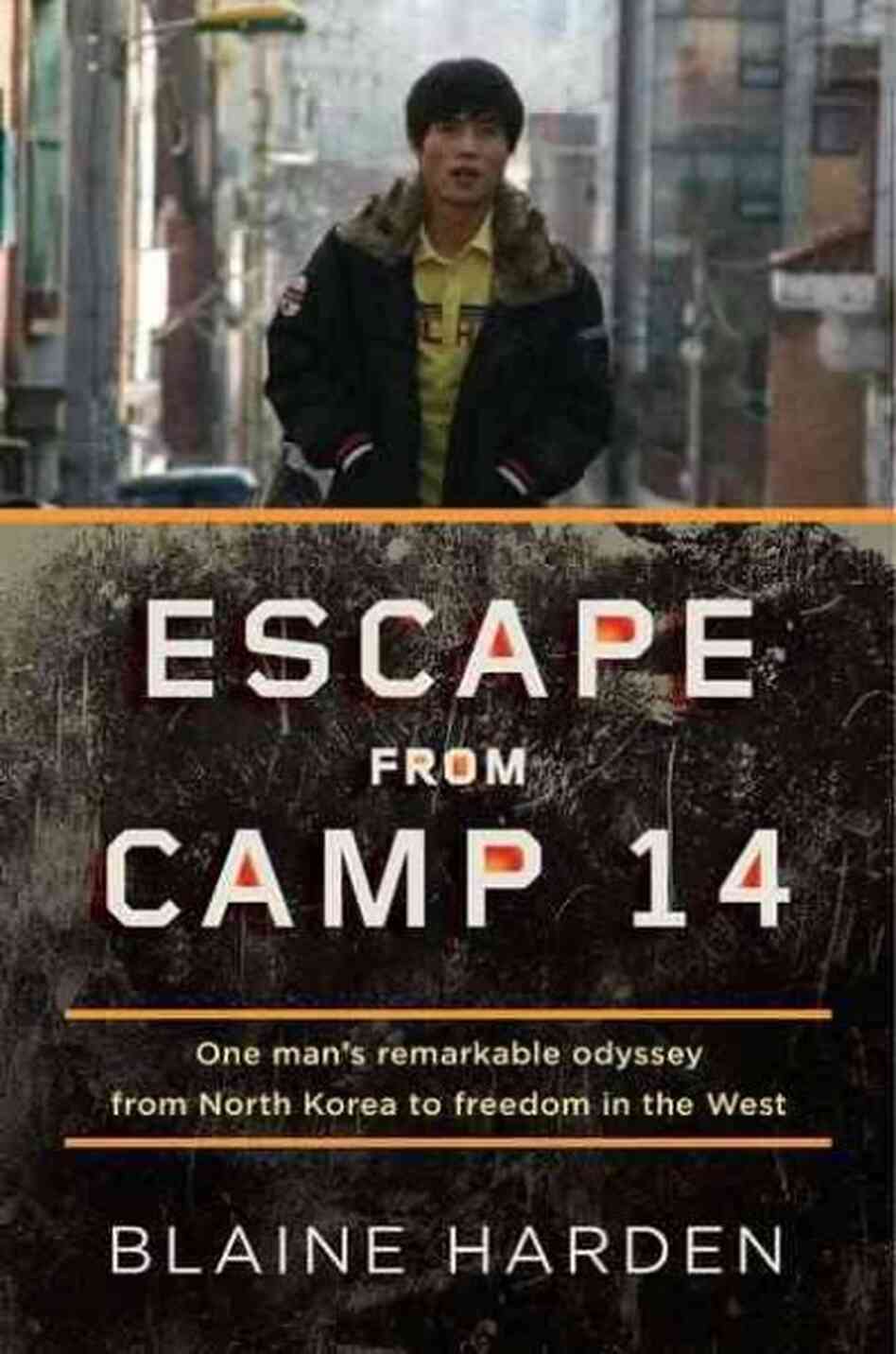
Escape from Camp 14 by Blaine Harden - 234 pages


Every year out of all the books I read, one or two linger and becomes a part of me in some way. This book is one of those. Like a visit to Auschwitz, you cannot read this book and not be effected by it.
Just last month I visited the Demilitarized Zone and actually got to step into North Korea for a few minutes while in the Joint Security Area. Yet even after that experience, North Korea to me remained what it is to most, a weird - potentially dangerous - but mostly laughable hermit kingdom. Shin's story recorded in Escape from Camp 14 is helping to wake me up from my apathy.


Part escape thriller, part (unintentional) commentary on both the Imago Dei and the depths of depravity, part humanitarian journalism - all true - Escape from Camp 14 is gripping from start to finish. As the only person bred, born, and raised in a North Korean Prison camp to escape to the West, the story of Shin Dong-Hyuk is unlike any other. Imagine reading Night by Elie Weisel, or the Diary of Anne Frank. Now imagine not just reading a story about someone plucked from a loving family and a world of comfort and thrown into the hellish conditions of a prison/death camp but instead you are reading the story of someone who only ever knew life in a cage. Shin wasn't captured and taken to an Auschwitz-like concentration camp. He was born and raised there. Totally cut off like a state bred feral child, Shin barely knew North Korea existed outside of the electrified prison fence - let alone a free world. And this didn't happen during our great grandparents life. It is happening now. ...this is a description of current events. As Harden writes, "North Korea's labor camps have now existed twice as long as the Soviet Gulag and about twelve times longer than the Nazi concentration camps." These many camps are are visible to anyone who knows how to use Google Earth, yet the outside world remains either in ignorance or apathy as to their existence.


Shin's story has started for me what I hope is a lifelong journey of education, prayer, and action in response to one of the greatest injustices in our world today - the North Korean Prison State.


Saturday, June 1, 2013

The God Who is There by D.A. Carson - 240 Pages


Let's start with what I didn't like, keeping in mind these criticisms are all relatively minor things and probably say more about me than the book and/or Carson:

- Too much poetry.

- Too much Scripture.  I know, that sounds really bad (especially when I complained that Keller didn't have enough scripture in his book a few posts ago) What I mean is that in virtually every chapter Carson quotes and reprints multiple, long sections of Scripture, many taking up many pages.  I love the Word, but if I want to read the Word I will read the Word (which I do btw).  If I want to read a book about the Word, it better be filled with references to the Word, but to reprint huge sections of Scripture seems lazy.

- Why did he have to use the same name as the classic Francis Schaeffer book?

- I didn't like the writing style.  It felt like it kept switching from a casual conversation ("let me list one or two reasons here" ...are you making this up as you go?...weird Canadian colloquialisms..."jolly well"....etc)  to lecture notes to a systematic theology.  This was distracting and I think is linked with the next, and in my opinion, largest drawback of the book.

- I couldn't figure out exactly who his audience was - non believers? new believers? students? Pastors?  All of the above? At times I felt like I was in a kids Sunday school class only to step into the seminary on the next page.  Not understanding exactly who he was trying to address was confusing at times.


Having said all of that I still would recommend this book for it's excellent content, even if I didn't like the presentation of it. Many passages were just flat out brilliant in the way they explained simple, beautiful doctrine.  Carson does accomplish what the subtitle states - Finding Your Place in God's Story - making this is a helpful resource for those seeking to understand the overarching themes of God's Glory and Grace woven throughout the pages of Scripture.


Friday, May 24, 2013

A Fighting Man of Mars by Edgar Rice Burroughs - 279 pages


The 7th book in the John Carter of Mars series, this book follows the same pattern as most in the series. That fact bothered me for the first few chapters...until I realized that it is exactly that simple plot of adventure, romance, and sci-fi fantasy that keeps me coming back for more.

A Fighting Man of Mars only mentions John Carter on the periphery of the story and instead centers around Hadron of Hastor, a young knight in Helium's army (I realize I have lost most of you already).  He falls in love...his love is kidnapped by an evil king...he goes to rescue her and all manner of intrigue, swashbuckling, romance, and sci-fi excitement ensue.

If you know and like the John Carter series, you will like this solid entry in the canon.

Sunday, May 12, 2013

The Meaning of Marriage by Tim and Kathy Keller - 288 Pages


Based off of a popular sermon series that Pastor and author Tim Keller preached at Redeemer Presbyterian Church in Manhattan, The Meaning of Marriage provides a timely and powerful voice to the modern Christian trying to understand and live out a Christ-centered marriage.  The Keller's challenge both ends of the spectrum of error concerning marriage, showing that marriage as God intended it can be both more enthralling than any illegitimate pleasure as well as more exhausting and sacrificial than what modern notions of love and romance advertise.

The Keller's have a well known love for C.S. Lewis and his influence is felt a lot in this book. They write with a Lewis-like approach: lots of compelling and wise theologically based thoughts...not an abundance of Scripture exposition.  Kierkegaard and poets get as much ink as the Word of God.  That approach isn't necessarily wrong, it just needs to be recognized for what it is and read with discernment.

My wife and I read this book together, setting aside time a few times a month to discuss it.  The conversations that ensued were very helpful and fruitful.  A discussion that was particularly eye opening and exciting was when the Keller's point out the differences between a consumer relationship vs. a covenant relationship and their implications on marriage.

This book is a great resource filled not only with wisdom for married couples but anyone trying to understand the purposes of God in the institution of Marriage.

Tuesday, May 7, 2013

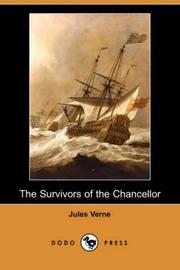
The Survivors of the Chancellor by Jules Verne - 140 pages


A lesser known, but no less exciting adventure from Jules Verne, The Survivors of the Chancellor follows the voyage of the British sailing ship Chancellor on its fateful voyage from Charleston, South Carolina to England.  As the title suggests, the ship soon intercects with tragedy - first sustaining a fire below decks, then wrecking on a reef, then drifting and slowly sinking.  In his usual detailed fashion, Verne tells a gripping story of survival as the characters strive not only against nature but each other, and their own temptations to abandon their civility.
A great, quick read, especially for anyone interested in survival and/or nautical fiction.